<<< Previous
|
|
Next
> >>
|
| POUR-FLUSH TOILETS |
| Goto Technical details/ Resources/ References |
Overview
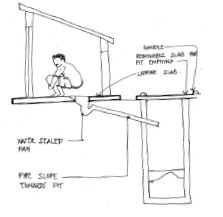
Manual pour-flush latrines are more common than the cistern based. It has a water seal against odour and insects. Excreta in the latrine pan is flushed by pouring 2-3 litres of water.
A typical pour-flush-leach-pit type latrine is made of a superstructure, a WC pan with water seal, collection pipe, approximately 100mm in diameter, to discharge thewaste and water into the pit. For desludging purposes it is better to have the pit off-set and not directly under the superstructure, Desludging is required every 3-5 years. High volumes of sullage discharged into the pit can cause spill over during rainy season. In dual leach pit pour-flush latrines, one pit can be used while the waste in the other pit is left for further decomposition. Once the pit being used is close to getting full, the decomposed matter from the other pit can be removed and this pit can be used now.
Manual pour-flush latrines are more common than the cistern based. It has a water seal against odour and insects. Excreta in the latrine pan is flushed by pouring 2-3 litres of water.
A typical pour-flush-leach-pit type latrine is made of a superstructure, a WC pan with water seal, collection pipe, approximately 100mm in diameter, to discharge thewaste and water into the pit. For desludging purposes it is better to have the pit off-set and not directly under the superstructure, Desludging is required every 3-5 years. High volumes of sullage discharged into the pit can cause spill over during rainy season. In dual leach pit pour-flush latrines, one pit can be used while the waste in the other pit is left for further decomposition. Once the pit being used is close to getting full, the decomposed matter from the other pit can be removed and this pit can be used now.
 click here to enlarge image |
Features
- One unit can serve one or several households
- Suitable for areas with deep groundwater table areas with adequatewater supply
- Low investment and maintenance costs
- Easy operation and maintenance
- The system can be upgraded
- Can be constructed locally using local masons
- Groundwater pollution high due to percolation of water from the pit.
- Manual removal of sludge from the pits regularly.
- Relocation of individual leachpits very difficult in densely populated areas
| Manual on the design, construction and maintenance of Low-Cost Pour-Flush
Walerseal Latrines in India
by AK. Roy and others.
Technology Advisory Group (TAG)-India. http://www.fastonline.org/CD3WD_40/JF/423/17- 406.pdf [C.eldoc1/d70d/undp1_840101zzz2B.pdf] |
| Water Flush Toilet http://www.schoolsanitation.org/BasicPrinciples/WaterFlushToilets.html [C.eldoc1/d70d/undp1_050101zzz3B.html] |
| Sulabh Technology- Sulabh Shauchalaya (Two pit Pour flush Latrine) http://www.sulabhenvis.in/pages/database_detail.asp?id=45. [c.eldoc1/d70d/undp1_080301zzz3B.html] |
|
|
<<< Previous
|
|
Next
> >>
|